


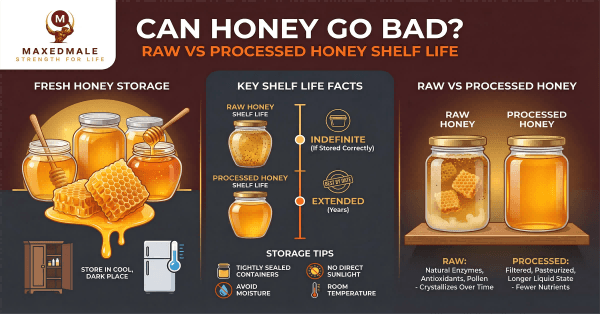
Why Honey Is One of Nature’s Most Stable Foods
At MaxedMale, we build our reputation on potency and longevity, so it makes sense that our core ingredient shares those same traits. You have likely heard the stories of edible honey found in ancient Egyptian tombs. That isn’t a myth—it is pure chemistry. When you ask, why does honey never go bad, the answer lies in a perfect storm of biological and chemical defenses that make it nearly impossible for bacteria to survive.
Here is the science behind why honey is the ultimate survival food:
- Low Moisture Content: To spoil, bacteria need water. Pure honey typically maintains a moisture content under 18%. This extreme dryness creates a “biological desert” where microorganisms cannot grow or reproduce.
- High Osmotic Pressure: Honey is a supersaturated sugar solution. This creates intense osmotic pressure, which acts like a sponge. If bacteria try to settle in the honey, this pressure literally sucks the water out of the bacterial cells, dehydrating and destroying them instantly.
- Natural Acidity: With a pH level ranging from 3.2 to 4.5, honey is naturally acidic. This acidic environment effectively neutralizes most bacteria and contaminants that cause standard food spoilage.
- Defensive Enzymes: The process starts with the bees. They secrete an enzyme called glucose oxidase. When the honey ripens, this enzyme produces low levels of hydrogen peroxide, a natural antiseptic that keeps the product sterile and stable for the long haul.
Does Pure Honey Expire? Breaking Down Best By Dates
Let’s get straight to the point: does honey expire? If we are talking about 100% pure, sealed honey, the answer is effectively no. You might see a “Best By” date printed on the bottle, but that is strictly for commercial standards and peak flavor profiling, not safety. In the US market, manufacturers are often required to put a date on consumable goods, but for genuine honey, this date indicates when the texture or color might start to shift, not when it becomes dangerous to eat.
The Reality of Honey Shelf Life:
- Pure Honey: Indefinite shelf life if stored correctly. It may crystallize, but it remains safe to consume.
- Commercial Dates: Usually set between 2 to 5 years to guarantee the manufacturer’s intended consistency.
- Sealed Integrity: As long as the seal is unbroken and moisture is kept out, bacteria simply cannot survive.
However, the rules change when you step away from raw honey into the world of blended wellness products. Risks associated with blended or diluted honey are real. If a product is cut with corn syrup or water, the natural preservative properties are compromised, allowing fermentation to start. Similarly, premium performance supplements that infuse herbs into the formula—like when you explore what Royal Honey does for performance—will have a specific shelf life. These complex formulations are stable thanks to our rigorous GMP-certified manufacturing, but they don’t last thousands of years like raw honey because the added botanical ingredients have their own expiration timelines.
Raw vs. Processed Honey: Shelf Life Differences
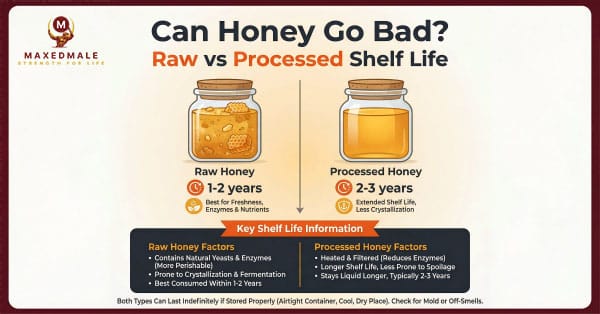
When comparing pure honey vs processed options, the shelf life remains indefinite for both, but the quality timeline differs significantly. Raw honey is unpasteurized and unfiltered, retaining natural enzymes, pollen, and propolis directly from the hive. Because it hasn’t been heated, does raw honey go bad? No, but it is more reactive to its environment. You might notice it crystallize or cloud up faster than commercial brands, but this texture change is actually a sign of potency and authenticity, not raw honey spoilage.
Commercial processed honey undergoes pasteurization (high heat) and ultra-filtration. This process kills yeast cells to prevent fermentation and removes particles to delay crystallization, keeping the liquid smooth and clear on the shelf. However, this heat treatment strips away many of the beneficial nutrients and enzymes. Understanding the differences between royal and natural honey varieties is crucial when selecting inventory for wellness-focused customers. While processed honey offers aesthetic consistency, it lacks the biological integrity of raw formulations.
Comparison: Raw vs. Commercial Honey
| Feature | Raw Unpasteurized Honey | Commercial Processed Honey |
|---|---|---|
| Processing | Strained only; no high heat. | Pasteurized and ultra-filtered. |
| Shelf Life | Indefinite (texture changes occur). | Indefinite (remains liquid longer). |
| Crystallization | Happens naturally and quickly. | Delayed significantly by heating. |
| Nutrient Density | High (retains enzymes/antioxidants). | Lower (heat degrades enzymes). |
| Visuals | Opaque, cloudy, or solid. | Clear, golden, and syrupy. |
Signaling Purity Through Natural Changes
Many consumers mistake crystallization for expiration, but it is the best indicator that you have a high-quality product. If your honey remains perfectly liquid forever, it is likely highly processed or adulterated with corn syrup. At MaxedMale, we prioritize formulations that maintain the natural efficacy of the ingredients. Does honey expire if it’s raw? Absolutely not. In fact, seeing your honey solidify is proof that the enzymes and natural sugars are intact and ready to perform.
Common Changes in Honey and What They Really Mean
If you open a jar from the back of your pantry and it looks different than the day you bought it, don’t panic. Honey is a living biological product, and visual changes are usually a sign of authenticity, not spoilage. Understanding these shifts helps you distinguish high-quality natural ingredients from synthetic syrups, a skill essential when trying to identify real vs fake royal honey in the marketplace.
Here is what those changes actually indicate:
- Crystallization (The “Sugar” Texture): This is the most common concern we hear. Is crystallized honey safe? Absolutely. This happens when glucose separates from the water content and forms crystals. It is actually a hallmark of high-quality, raw honey. Processed honey often remains liquid longer because it has been filtered to death or cut with syrup. If your honey turns solid, it just means it is real.
- Color Darkening: Over time, old honey is still good, but it will naturally darken. This is due to oxidation and the Maillard reaction (browning), especially if stored in warmer temperatures. The flavor may become bolder or heavier, losing some of the lighter floral notes, but it is perfectly safe to consume.
- Cloudiness or Separation: If you see a cloudy layer or white swirls, you are likely looking at unfiltered honey containing natural pollen, beeswax, and enzymes. Unlike clear, ultra-filtered commercial brands, this cloudiness confirms the presence of the bioactive compounds we value for vitality and performance.
Key Takeaway: Unless you see mold or smell alcohol (fermentation), these physical changes are natural aging processes, not expiration.
When Honey Can Actually Go Bad: Rare but Important Signs
While we pride ourselves on the longevity of our products at Maxedmale, it is possible for honey to spoil if it isn’t handled correctly. The main culprit is usually moisture. Since honey naturally attracts water from the air, leaving a lid loose in a humid pantry or using a wet spoon can raise the water content above safe levels. Once that moisture gets in, dormant yeasts can wake up and trigger honey fermentation.
Here is how to tell if your jar has turned:
- Smell: A distinct scent of alcohol or yeast, similar to rising bread dough.
- Visuals: Bubbles rising to the surface or a layer of foam that wasn’t there before.
- Taste: A sharp, sour flavor rather than the distinct sweetness you expect.
If you notice these signs, it means the honey has fermented and should be discarded. This is one reason why sealed, single-serving wholesale honey packets are excellent for maintaining long-term freshness, as they eliminate the risk of introducing moisture or contaminants.
Infant Botulism and Safety
There is one specific safety rule that never changes: botulism in honey. While harmless to adults and older children, honey can contain Clostridium botulinum spores. An infant’s digestive system is not developed enough to handle these spores. Therefore, you should never feed honey to babies under one year of age.
Criteria for Safe Disposal
Raw honey spoilage is rare, but don’t try to salvage it if it happens. If you see mold (which usually grows on crumbs left in the jar, not the honey itself) or smell fermentation, throw it out. It is better to be safe and grab a fresh batch than to risk consuming spoiled food.
Best Practices for Storing Honey to Maximize Longevity
You want your supply to stay potent. While our formulas are naturally stable, storing honey properly is the only way to guarantee it maintains that premium texture and flavor profile. At MaxedMale, we treat every batch with care, and you should do the same at home to protect your investment.
Follow this protocol for maintaining peak quality:
- Choose the Right Vessel: Always opt for airtight glass jars. Glass is non-reactive and creates the best seal against moisture. Avoid metal containers, which can oxidize and alter the flavor, and skip thin plastics that might leach over time.
- Control the Environment: Keep your jars in a cool, dry spot away from direct sunlight or heat-producing appliances like your stove. A standard pantry at room temperature (around 64–75°F) is ideal.
- Skip the Fridge: Never refrigerate pure honey. Cold temperatures dramatically accelerate crystallization, turning smooth liquid into a hard, gritty block much faster than normal.
- Keep It Dry: Moisture is the enemy. Introducing water creates an environment where yeast can thrive, potentially leading to fermentation. Always use a clean, completely dry spoon when scooping.
If you are managing bulk inventory or just want to ensure your stash stays fresh, check our guide on how long honey lasts and storage tips to keep your product ready for action.
How to Fix Crystallized Honey (Without Losing Quality)
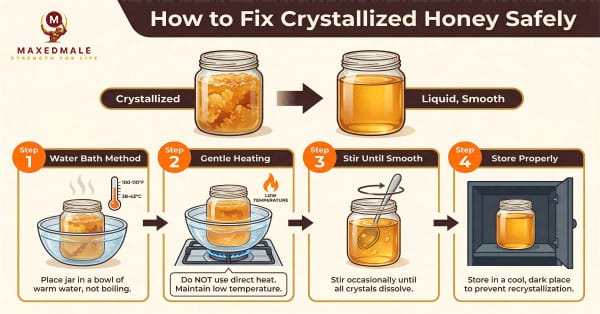
If you find your jar has turned solid or gritty, don’t throw it out. This is a natural process, not a sign of spoilage. To decrystallize honey and return it to that smooth, liquid gold texture without compromising its potency, you need to apply gentle heat. We recommend a simple warm water bath method to protect the enzymes and flavor profile.
Step-by-Step Warm Water Bath Guide:
- Check the Container: Ensure your honey is in a glass jar. If it is in plastic, spoon it into a glass container first to avoid leaching chemicals during heating.
- Prepare the Bath: Fill a bowl or pot with warm water. Aim for a temperature around 100°F to 110°F (similar to a hot bath). Do not use boiling water, as extreme heat can pasteurize raw honey and destroy beneficial nutrients.
- Submerge and Stir: Place the glass jar in the water, ensuring the water level doesn’t reach the lid. Let it sit, stirring occasionally to distribute the heat evenly until the crystals dissolve.
Why You Should Avoid the Microwave
It might be tempting to nuke the jar for 30 seconds, but this is a major mistake. Microwaves heat unevenly and can create “hot spots” that scorch the sugars and kill the bioactive compounds that make the product valuable. Preserving the integrity of these ingredients is crucial, especially when you understand the balance between royal honey price and value. By using the warm water method, you ensure a honey crystallization fix that retains the full safety and nutritional value of the formula.
Honey in Supplements and Wellness Products
Honey isn’t just a kitchen staple; it is a powerful, shelf-stable delivery system for modern wellness. Because pure honey naturally resists bacteria and spoilage due to its low moisture content, it acts as an ideal, preservative-free base for performance formulas. This natural stability ensures that the active ingredients in our herbal honey blends remain potent and effective without relying on heavy chemical additives.
At MaxedMale, we elevate this natural durability through rigorous professional standards. While raw honey is tough, consistent quality requires precision. Our production lines operate under strict GMP, FDA, HACCP, and ISO 22000 certifications, ensuring that every batch is free from contaminants that could compromise shelf life.
For businesses and consumers focused on an active lifestyle, this translates to reliable “Strength for Life” in convenient, discreet packaging. Whether you need ready-to-ship stock or are exploring OEM and ODM manufacturing services, we ensure the natural longevity of honey is maximized. This guarantees a product that stays fresh and delivers quick energy exactly when it is needed.