


The Origins of Royal Honey vs Natural Honey
When people compare royal honey vs natural honey, they’re really asking: How are they made, and what makes them different from the hive up? Let’s keep it simple and clear.
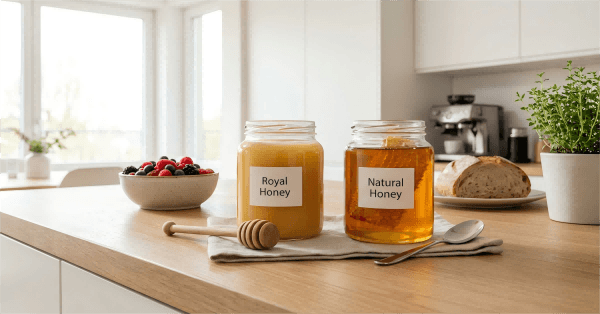
How Natural Honey Is Made from Flower Nectar
Natural honey starts with flowers.
- Worker bees collect nectar from blossoms
- They carry it back, pass it between bees, and reduce the water content
- Enzymes in the bees’ mouths transform nectar into honey
- Bees store it in wax cells and seal it with a thin wax cap
In short:
Natural honey = flower nectar + bee enzymes + time in the hive.
How Royal Honey Is Made with Added Royal Jelly
Royal honey is natural honey that’s enriched with royal jelly.
- Royal jelly is a creamy substance bees make to feed the queen
- We blend premium natural honey with controlled amounts of royal jelly
- The result is a thicker, richer honey with a distinct profile
Formula idea:
| Product Type | Main Base | Added Ingredient |
|---|---|---|
| Natural Honey | Flower nectar | None |
| Royal Honey | Natural honey | Royal jelly |
Differences in Bee Roles and Hive Production
Inside the hive, bees have very specific jobs:
- Worker bees
- Collect nectar and pollen
- Produce honey and royal jelly
- Queen bee
- Fed royal jelly directly
- Focused on laying eggs, not making honey
Because royal jelly is only made in small amounts for queen and larvae, it’s naturally limited. That’s why any honey product using royal jelly is more specialized.
Why Royal Honey Is Rarer and More Limited
Royal honey is rarer for a few simple reasons:
- Royal jelly production is low-volume and labor-intensive
- Collecting it must be done carefully to avoid stressing the hive
- High-quality royal jelly requires strong, healthy colonies
- Blending must be precise and controlled, not mass-dumped
So while natural honey can be produced in larger quantities, royal honey will always be more limited and niche.
Popular Regions and Types for Each Honey
Different regions give honey different characters.
Natural honey types:
- Europe & US – clover, wildflower, orange blossom
- New Zealand – manuka and specialty honeys
- Mediterranean & Middle East – citrus, thyme, acacia
Royal honey types:
- Often produced in Asia, the Middle East, and selected European farms
- Focus on floral honey + carefully sourced royal jelly
- Many products are tailored to global markets looking for premium blends
How Sourcing Affects Quality and Ethics
As a factory and wholesaler, I focus hard on ethical, traceable sourcing:
- Work with beekeepers who avoid over-harvesting
- Support balanced hives: enough honey and royal jelly left for the bees
- Prefer uncontaminated floral areas away from heavy pollution
- Push for transparent labels: clear royal honey ingredients list, not vague blends
Key checks you want from any brand:
- Origin country and floral source listed
- Clear mention of royal jelly in honey (for royal honey)
- No unnecessary additives in pure, natural honey
- Commitment to sustainable honey sourcing and ethical beekeeping practices
This is how we protect quality, bees, and your trust at the same time.
Nutritional Comparison: Royal Honey vs Natural Honey
When people ask me about royal honey vs natural honey benefits, this is where I always start: the nutrition.
Basic nutrients in natural raw honey
Natural honey is mainly:
- Natural sugars: fructose, glucose
- Trace enzymes from the bees
- Antioxidants (polyphenols)
- Tiny amounts of vitamins & minerals
- Almost no fat and no protein
It’s a quick energy source with some natural compounds that support general wellness as part of a normal diet.
Extra nutrients from royal jelly in royal honey
Royal honey is usually natural honey + royal jelly (and sometimes bee pollen, depending on the brand).
Royal jelly adds small amounts of:
- Extra B vitamins
- More amino acids (protein building blocks)
- Unique fatty acids found in royal jelly
- Slightly higher antioxidant potential
The exact level depends on how much real royal jelly is used. This is why checking the royal honey ingredients list and brand transparency matters.
Vitamins, minerals, and fatty acids: quick look
Typical values per tablespoon (approximate, may vary by brand, floral source, and processing):
| Nutrient / 1 Tbsp | Natural Raw Honey | Royal Honey (with Royal Jelly) |
|---|---|---|
| Calories | ~60–65 kcal | ~60–70 kcal |
| Total sugars | ~17 g | ~17–18 g |
| Fat | ~0 g | Trace (from royal jelly) |
| Protein | ~0 g | Slightly higher (trace) |
| B vitamins | Very low | Slightly higher |
| Minerals (K, Ca, Mg) | Trace | Trace–slightly higher |
| Antioxidants | Present | Often a bit higher |
Use this table as a directional comparison, not lab-grade numbers. Each batch of honey is different.
Calories: royal honey vs natural honey
Per spoon, calories are almost the same:
- Natural honey: ~60–65 kcal per tablespoon
- Royal honey: usually just a bit higher if it has sugar additives or a richer royal jelly blend
If you care about calories, portion size matters more than the type.
Real nutrition vs “superfood” hype
A few straight points:
- Both honeys are high in natural sugars, not magic diet food
- Royal honey isn’t a miracle product; it’s simply enriched with royal jelly
- Natural raw honey has solid everyday advantages: taste, energy, and natural compounds that fit well in a balanced lifestyle
- Claims that any honey alone will “fix” major health issues are overblown
I focus on realistic daily benefits, not wild “superfood” marketing.
Why raw and minimally processed honey matters
Whether you go royal honey or natural:
- Raw / unfiltered honey usually keeps more enzymes and natural antioxidants
- Heavy processing and high heat can reduce those natural compounds
- Look for:
- Pure honey vs processed honey
- Clear origin (floral source, country)
- Brands that avoid unnecessary additives
If you want deeper guidance on clean formulas and how to spot real vs fake royal honey, I’ve broken that down in detail in our guide on royal honey real vs fake and smart shopping tips.
In short:
- Choose natural raw honey for daily use and cooking.
- Choose royal honey if you want a slightly more “boosted” profile from royal jelly and are OK paying more for it.
Taste, Texture, and Everyday Uses of Royal Honey vs Natural Honey
Flavor profile of natural honey by floral source
Natural raw honey changes a lot with the flowers the bees visit:
- Clover / wildflower: light, smooth, easy everyday sweetness
- Acacia: very mild, clean, slow to crystallize
- Citrus: light with a fresh, slightly zesty note
- Manuka and other specialty honeys: stronger, earthy, sometimes a little bitter
If you mainly use honey in tea, coffee, or on toast, a mild floral honey is usually the easiest to live with daily.
Royal honey taste and texture (with royal jelly)
Royal honey is natural honey blended with royal jelly (and sometimes bee pollen or herbs, depending on the brand). In practice:
- Taste: richer and deeper than basic table honey, sometimes a bit tangy or creamy
- Texture: thicker, more velvety, and often smoother on the tongue
Because of that fuller flavor, I treat royal honey more like a “premium topping” than an all-purpose sweetener. If you want to see how we position it as an everyday power source, check our breakdown of royal honey VIP sachets and their use.
How each honey behaves in hot drinks and cold foods
- In hot drinks:
- Natural honey melts fast and blends easily into tea, coffee, and herbal infusions.
- Royal honey also dissolves well, but I prefer it in herbal teas or warm water so you can taste the richer profile instead of drowning it in strong coffee.
- In cold foods:
- Both can thicken and get a bit firmer in yogurt, smoothies, or fridge snacks.
- Stir well; royal honey’s thicker texture gives a nice “luxury” feel in cold bowls and parfaits.
Best ways to use natural honey in daily cooking
For everyday cooking, natural honey wins on versatility and price:
- Use it to:
- Sweeten tea, coffee, oatmeal, smoothies
- Glaze chicken, salmon, tofu, or roasted veggies
- Mix into salad dressings, marinades, and dips
- Bake cookies, cakes, and granola (use it as part of the sugar, not all of it)
If you cook a lot, a big jar of pure, raw or minimally processed honey is usually the smartest move.
Best ways to use royal honey for snacks and gourmet dishes
I keep royal honey for direct use, not heavy cooking:
- Drizzle on:
- Greek yogurt or skyr with nuts and seeds
- Fresh fruit, dates, or nut butter toast
- Cheese boards (works great with aged cheese or brie)
- Add to:
- A small glass of warm water or herbal tea
- Simple desserts where you want the honey flavor to stand out
Because royal honey costs more, it makes sense to enjoy it straight instead of hiding it inside complex recipes. For more ideas on using individual sachets, you can check our guide on how to use a royal honey pack for men.
Simple recipe ideas and easy swaps
A few quick, no-fuss ideas:
- Honey yogurt bowl:
- 1 cup plain yogurt
- 1–2 tsp natural honey (or 1 tsp royal honey for a richer finish)
- Handful of nuts + fruit
- Honey toast upgrade:
- Wholegrain toast + nut butter
- Natural honey for everyday
- Swap with royal honey when you want a more premium bite
- Honey-lime drizzle:
- 2 tbsp natural honey
- Juice of ½ lime
- Use on fruit salad or grilled chicken; switch in royal honey if you want a thicker, more intense glaze for special occasions.
Bottom line: natural honey is your daily workhorse in the kitchen; royal honey is the upgrade you pull out when you want stronger taste, smoother texture, and a more premium experience.
Wellness Benefits in Daily Life: Royal Honey vs Natural Honey
When we talk royal honey vs natural honey benefits, we’re really talking about how you use them day to day. No magic, just smart habits.
Shared Daily Perks
Both royal honey and natural raw honey are:
- Naturally sweet, easy to add to snacks and drinks
- A source of quick energy from simple sugars
- Packed with enzymes and antioxidants compared to processed sugar
- Versatile for warm drinks, yogurt, toast, and simple desserts
Natural Honey: Everyday Support
Natural raw honey advantages in daily life:
- Works well as your default sweetener instead of refined sugar
- Popular in warm water, tea, or coffee for a smoother taste
- Often used for comfort when you have an irritated throat (warm honey drinks are a classic home habit worldwide)
- Many people find raw, unfiltered honey easier on the stomach than heavy desserts
Royal Honey: Extra Boost Feel
Royal honey with royal jelly is usually used more “on purpose” than casually:
- People often reach for it when they want a richer, more premium honey experience
- Commonly taken straight from the spoon before work, training, or long days
- Popular in natural energy supplements and blends focused on stamina and vitality-style positioning (for example, our own custom energy-focused honey blends)
Again, this is about feel and preference, not promises.
Throat Comfort & Minor Skin Use
Common everyday uses (non-medical):
- Warm honey drink (not boiling hot) is widely used for:
- Throat comfort
- A soothing bedtime routine
- On skin, some people use a thin layer of honey in:
- DIY face masks
- Simple spot care for dry patches
- Quick lip care when nothing else is around
Always patch test first; honey is still a bee product.
Simple Daily Routine Ideas
Keep it realistic and easy:
Natural Honey Routine
- Morning:
- 1 tsp in warm water, tea, or coffee
- Midday:
- Drizzle over yogurt, oats, or fruit
- Night:
- Small spoon if you like something sweet after dinner
Royal Honey Routine
- Morning or pre‑workout:
- 1 small spoon straight or on toast
- Evening snack:
- Mix with nuts or spread on whole‑grain crackers
You don’t need big amounts; consistency beats quantity.
What Honey Can And Cannot Do
Honey CAN:
- Replace refined sugar in a more interesting, flavorful way
- Be part of a balanced wellness routine (sleep, diet, movement)
- Offer antioxidant-rich, less processed sweetness (especially raw, unfiltered types)
Honey CANNOT:
- Replace proper medical care or medicine
- Fix serious health issues on its own
- Justify overdoing sugar “because it’s natural”
Use honey as a smart upgrade, not a cure-all. For deeper lifestyle ideas, you can also check how honey fits into broader herbal honey wellness trends in our guide on the rise of herbal honey in wellness.
Quick Snapshot: Daily Use Comparison
| Use Case | Natural Honey | Royal Honey |
|---|---|---|
| Main role | Everyday sweetener | Occasional premium boost |
| Best for | Drinks, cooking, baking | Straight from spoon, gourmet snacks |
| Typical time of day | All day | Morning / pre‑activity |
| Texture & flavor | Lighter, floral/varies by source | Thicker, richer, more intense |
| Routine style | Daily staple | Targeted, “intentional” use |
Safety, Quality, and Purity Checks for Royal Honey vs Natural Honey
Common adulteration issues with royal honey
With royal honey, the main risk is “premium” labels on products that are just flavored syrup:
- Added sugars (glucose, fructose syrup, cane sugar) to cut costs
- Extremely low royal jelly content but strong “royal honey” branding
- Hidden additives, flavorings, or stimulants in some “performance” blends
If the price is unbelievably low for “royal honey with royal jelly,” it usually means the product is diluted or not what it claims to be.
Purity concerns and mislabeling in natural honey
Natural honey gets faked a lot too:
- Blends of cheap imported honey sold as “local”
- Ultra‑filtered honey with pollen removed but still called “raw”
- “100% pure” on the front label, while the ingredients list tells a different story
Look for clear details on floral source, country of origin, and whether it’s raw or pasteurized. Vague labels are a red flag.
How to read honey labels and ingredients lists
When I choose royal honey or natural raw honey, I check the label like this:
- Ingredients:
- Natural honey: should say just “honey”
- Royal honey: ideally “honey, royal jelly” (and bee pollen if added)
- Avoid: corn syrup, glucose syrup, artificial flavors, colorings
- Claims: “raw,” “unfiltered,” “cold‑filtered,” “no added sugar” should be consistent with ingredients
- Origin: single country or region listed is usually more traceable than “blend of EU/non‑EU honeys”
If you want a deeper dive into blends and energy-focused formulas, we break that down in our post on natural honey supplements and daily energy support.
Why third‑party testing and certifications matter
For royal honey vs natural honey, I always tell customers: outside testing is your best friend. Third‑party labs and certifications help confirm:
- No illegal or hidden ingredients
- Authentic honey (not sugar syrup)
- Verifiable royal jelly content in royal honey
- Free from heavy metals and basic contaminants
Certifications like organic, fair trade, or independent lab tests don’t make honey “perfect,” but they do raise the bar for honesty.
Allergies to pollen or bee products
If someone is sensitive to bee products, both types of honey need extra caution:
- Natural honey can carry trace pollen
- Royal honey includes royal jelly (and often bee pollen) which can be more reactive for some people
- Always start with very small amounts if you’re unsure and stop if any discomfort shows up
Anyone with a known strong reaction to bee stings or bee products should be especially careful with royal jelly blends.
Best storage practices and shelf life
For both royal honey and natural honey, storage is straightforward:
- Keep in a cool, dry place away from direct sunlight
- Room temperature is fine; no fridge needed for regular honey
- Use a clean, dry spoon every time to avoid introducing moisture or crumbs
- Crystallization is normal in natural honey—warm the jar gently in a water bath to liquefy
- Royal honey with higher royal jelly content is a bit more sensitive: avoid heat and always seal tightly
Stored right, natural honey can last for years. Royal honey products are usually best used within the date on the jar for top flavor and consistency.
For more on using premium blends correctly and avoiding problem additives, you can also check our guide on how to take royal honey safely and effectively.
Price, Value, and When to Choose Royal Honey vs Natural Honey
Typical price ranges
Prices vary by brand, origin, and purity, but globally this is what most buyers see:
| Type | Rough price range (per 250g / ~8.8oz) | Notes |
|---|---|---|
| Regular processed honey | Low | Supermarket blends, heavily mixed |
| Raw natural honey | Low–Medium | Better flavor, less processed |
| Premium monofloral honey | Medium–High | E.g. Manuka, Sidr, Acacia |
| Royal honey (with jelly) | High–Premium | Specialized, limited production |
Why royal honey costs more
Royal honey costs more per jar because:
- It contains added royal jelly, which is hard to collect and limited in supply.
- Production is more controlled and slower per hive.
- Many royal honey products use higher-grade base honey to match the premium positioning.
If you want a deeper look at pricing logic and what actually justifies the higher tag, I break this down in detail in our guide on royal honey price vs value.
When paying extra for royal honey makes sense
Royal honey is worth the higher price if:
- You’re looking for a more specialized, premium product with royal jelly in the mix.
- You only use a small spoonful at a time and want a richer experience, not a big daily sweetener.
- You like stronger, more complex flavor and treat it like a luxury item.
- You’re buying for gifting or special occasions.
When natural honey is the smarter everyday pick
Natural honey is usually the better choice when:
- You use honey every day in tea, coffee, smoothies, cooking, or baking.
- You want good value per spoonful without paying for premium extras.
- You prefer a specific floral taste (orange blossom, wildflower, clover, etc.).
- You’re buying larger jars for family use.
Availability: online vs local
- Local stores / markets
- Easier to find basic and raw natural honey.
- Good if you want regional or “from my area” honey.
- Online
- Much better selection of royal honey, specialty blends, and imported types.
- You can compare ingredients lists, lab tests, and reviews side by side.
- Check product pages carefully; our FAQ on why royal honey is so popular in 2026 walks through what most people look for before buying.
Tips for buying in bulk and getting better value
To stretch your budget without sacrificing quality:
- Use natural honey for volume (daily sweetening, recipes) and royal honey in small amounts when you really want it.
- Buy larger jars of a trusted natural honey brand; the per-gram cost drops fast.
- For royal honey, look for:
- Clear royal honey ingredients list
- Honest serving size (no micro-dose marketing)
- Options like multi-pack deals if you use it regularly
- Avoid “too cheap to be true” honey; it often means heavy blending or low-grade product.
How to Pick the Right Honey for You
Start with your goals
Before you pick between royal honey and natural honey, ask yourself:
- Do I mainly care about taste and everyday use, or more about premium ingredients like royal jelly in honey?
- Do I want something simple for daily cooking, or a special boost for certain moments?
- Am I trying to keep things clean, pure, and minimally processed, like organic natural honey and raw, unfiltered options?
Taste vs nutrition
If taste comes first:
- Go for natural raw honey that matches your flavor style: light and floral, bold and dark, or regional types like manuka or yellow box. You can see how floral source affects flavor in our breakdown of what yellow box honey is at What Is Yellow Box Honey?.
If “extra” ingredients matter:
- Choose royal honey that clearly lists royal honey ingredients (honey + royal jelly, sometimes bee pollen or herbs).
- Always check that the label stays close to pure honey vs processed honey standards and doesn’t hide cheap syrups.
Match honey to your lifestyle
- For cooking and daily use: natural honey is the easy pick for tea, coffee, baking, sauces, and marinades.
- For on‑the‑go or targeted use: royal honey packs or blends are better when you want something pre‑portioned and strong in flavor. You can see how these formats work in our guide to what a honey pack is at What Is Honey Pack?.
- For snacks: use natural honey on yogurt, oats, toast; use royal honey in smaller amounts as a topping or straight from the pack.
Budget, quality, and brand trust
- Natural honey: better for bulk buys and daily use. Look for:
- Clear floral source (e.g., clover, acacia, manuka)
- “Raw”, “unfiltered”, or “minimal processing” on the label
- Ethical beekeeping and sustainable honey sourcing claims
- Royal honey: costs more because of royal jelly and limited supply. Make sure:
- The brand is open about where the honey comes from
- There is third‑party testing or at least strong quality control
- The ingredients list is short and honest
Build a simple honey routine
Keep it realistic so you can stick to it:
- Pick one natural honey as your daily all‑rounder.
- Add one royal honey as your premium or “special use” option.
- Store both in a cool, dry place with lids tight.
- Use a consistent small amount each day instead of random heavy doses.
When you keep your goals, taste, budget, and trust in mind, choosing between royal honey vs natural honey becomes simple—and you end up with a setup that actually fits your real life, not just the label.