


The Origin of the Myth: Why Do People Fear Metal? 2026 Update
The short answer is: Yes, you can use a metal spoon. The fear that touching Maxedmale honey with a metal utensil will instantly destroy its beneficial enzymes or ruin the flavor is a myth. This misconception stems from a time when kitchenware was vastly different from the stainless steel cutlery found in most American homes today.
As the Maxedmale factory and wholesaler, we handle tons of raw honey annually. We understand that this myth persists due to a misunderstanding of material science and historical context. The reaction between honey and metal requires specific conditions—namely, the wrong type of metal and a long duration of contact—which rarely apply to simply scooping a honey pack or stirring a drink.
Historical Context of Reactive Metals like Iron and Aluminum
The root of the “no metal” rule dates back to when kitchen utensils were commonly made from reactive metals. Before the widespread adoption of food-grade stainless steel, households used:
- Unlined Iron: Prone to rusting and heavy oxidation.
- Aluminum: Highly reactive to acids.
- Copper: Can develop toxic verdigris when exposed to acidic foods.
In these historical contexts, leaving a spoon made of these materials inside a jar of honey would indeed cause a chemical reaction. The metal would corrode, leaching metallic ions into the honey, altering the taste, and potentially spoiling the product. However, modern silverware is almost exclusively made of stainless steel, which is non-reactive.
The Chemistry of Acidic Honey and Corrosion
To understand why reactive vs non-reactive metals matter, we must look at the Honey acidity pH level. Honey is naturally acidic, typically falling between 3.4 and 6.1 on the pH scale.
- The Reaction: Acids react with base metals (like iron or aluminum), causing oxidation.
- The Result: This reaction produces metallic salts, which leads to a distinct, unpleasant metallic taste and creates a greenish tint in the honey.
- The Solution: Stainless steel is an alloy specifically designed to resist this acidic corrosion.
Because Maxedmale honey is a premium natural product, preserving its purity is our priority. However, the acidity is not strong enough to damage modern cutlery during the few seconds it takes to serve a spoonful.
Confusion Between Long-Term Storage and Quick Scooping
The biggest source of confusion lies in the difference between storage and serving. The “no metal” advice was originally intended for long-term storage, not momentary contact.
| Action | Risk Level | Explanation |
|---|---|---|
| Quick Scooping | Zero Risk | Dipping a spoon to serve honey takes seconds. No chemical reaction can occur this quickly. |
| Long-Term Storage | High Risk (with wrong metal) | Leaving a reactive metal spoon inside a jar for weeks allows the acid to slowly corrode the metal. |
Consumers often conflate these two scenarios. While we never recommend storing honey in an aluminum drum, using a standard teaspoon to enjoy your Maxedmale Royal Honey is perfectly safe and will not compromise the quality or the vitality benefits of the product.
Maxedmale Team
The Science of Stainless Steel vs. Reactive Metals 2026
Why Stainless Steel Cutlery is Safe for Honey
Let’s cut through the noise. As a manufacturer, I can tell you that the fear of Metal Spoons ruining your honey is largely outdated. In the United States, the vast majority of modern kitchen cutlery is made from high-grade stainless steel. This material is chemically inert, meaning it does not react with the natural Honey acidity pH level.
When we process maxedmale honey in our facility, we use industrial-grade stainless steel vats and piping. If stainless steel caused a Stainless steel honey reaction, the entire global honey industry would be in trouble. You can confidently scoop your honey with a standard kitchen spoon without worrying about corrosion, leaching, or altering the flavor profile.
Reactive Metals to Avoid: Copper, Iron, and Aluminum
While stainless steel is safe, the “no metal” rule does have some historical truth rooted in Reactive vs non-reactive metals. If you are using antique utensils or specific camping gear, you need to be careful. Certain metals react negatively when they come into contact with acidic foods like honey:
- Aluminum: Can impart a metallic taste and degrade if left in contact with honey for long periods.
- Iron: Prone to rusting and reacting with acids, which can spoil the honey’s flavor.
- Copper: Highly reactive; it can cause rapid oxidation and is generally unsafe for acidic food storage.
- Galvanized Metal: Avoid this entirely, as the zinc coating reacts aggressively with acids.
Impact on Enzymes and 10HDA in Royal Jelly
The biggest concern our customers have is whether metal destroys the beneficial properties of our products, specifically 10HDA Royal Jelly stability. Royal Jelly is a complex substance, and preserving its enzymatic activity is crucial for its effectiveness as a vitality supplement.
The reality is that a quick interaction—like scooping honey out of a jar—does not provide enough time for a chemical reaction to occur that would denature these enzymes. The structural integrity of the 10-HDA (10-hydroxy-2-decenoic acid) remains intact during serving. We prioritize maintaining this potency throughout our supply chain. To understand why this specific compound matters so much for your routine, read our detailed guide on Royal Jelly benefits and 10HDA quality. Rest assured, using a clean stainless steel spoon for a few seconds will not compromise the quality of your maxedmale honey.
Author: Maxedmale Official Team
Expertise: Vitality Supplements Manufacturing & Wholesaling
Mission: Providing authentic, high-quality wellness solutions for men.
The “Factory Proof”: How Maxedmale Honey is Processed
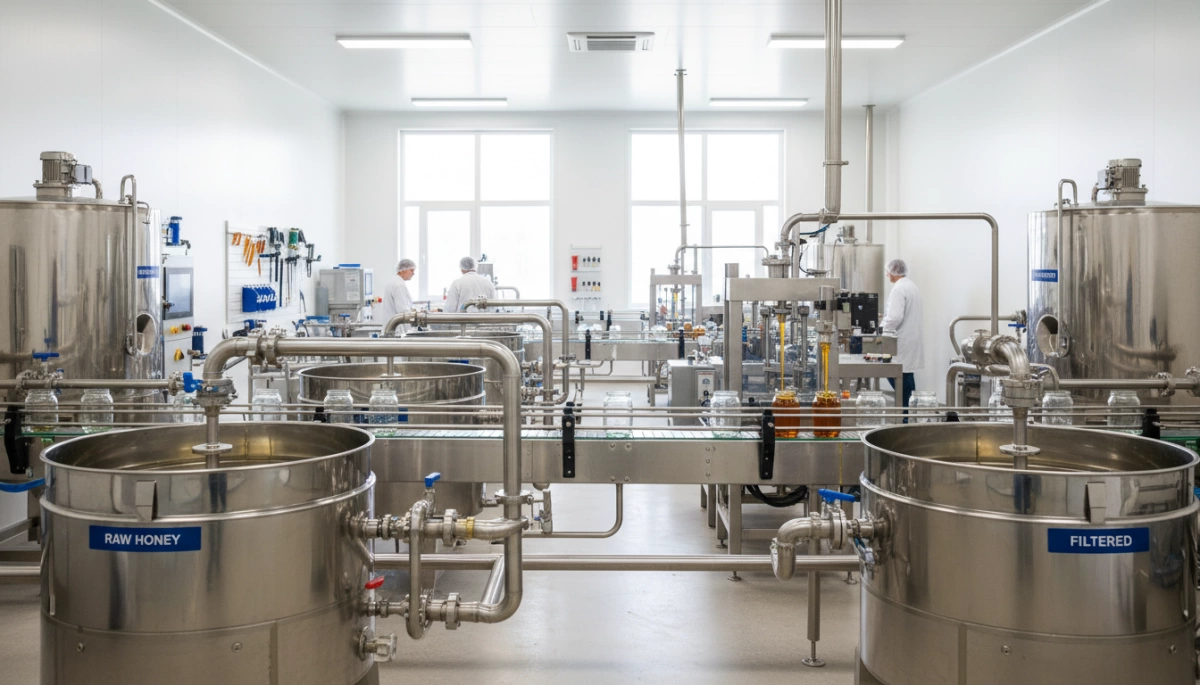
Let’s cut through the noise and look at the reality of manufacturing. There is a massive disconnect between the “no metal spoon” myth and how honey is actually harvested and bottled on a commercial scale. Before our Maxedmale honey ever reaches your kitchen, it has already come into contact with metal multiple times during production, without losing any of its quality or vitality.
Industrial Extraction in Stainless Steel Equipment
The journey of our honey begins in the extraction room. We don’t use wooden buckets or ceramic bowls to harvest thousands of pounds of product. Modern beekeeping and processing rely entirely on stainless steel honey reaction-proof machinery.
The centrifugal extractors that spin the honey out of the combs are made of high-quality, food-grade stainless steel. If momentary contact with metal destroyed the enzymes or oxidized the honey, the product would be ruined before it even left the extraction floor. The speed and friction in these machines are far more intense than a quick scoop with a teaspoon, yet the chemical integrity of the honey remains 100% intact.
Storage Vats and Bottling Lines
Once extracted, the honey moves through a series of pipes and into massive holding tanks. These settling tanks and storage vats are also constructed from stainless steel. This material is chosen specifically because it is non-reactive and sanitary.
- Settling Tanks: Stainless steel allows us to heat the honey gently to prevent crystallization without leaching chemicals.
- Bottling Machinery: The nozzles and pumps that fill our honey pack sachets are metal.
We maintain strict quality control throughout this process. While we manage industrial storage, it is important for you to understand how long honey will last and how to store it properly at home to maintain that freshness. The industrial process proves that the material itself isn’t the enemy; it’s about the type of metal used.
Why Global Standards Mandate Stainless Steel
The use of stainless steel isn’t just a preference; it is a global industry standard for food safety. Regulatory bodies mandate the use of food grade utensils and machinery because stainless steel is inert. It does not react with the honey acidity pH level, ensuring that no metallic taste or corrosion byproducts enter the food supply.
If reactive metals were used, the acidic nature of honey would indeed cause issues. However, the industry strictly prohibits reactive metals like copper or iron in processing equipment. This confirms that high-quality metal is perfectly safe for handling honey, from our factory vats to your dining table.
Maxedmale Team
When Material Actually Matters: Storage vs. Serving 2026
The Safety of Scooping and Serving
Let’s clear up the confusion immediately. Using a standard kitchen spoon to scoop Maxedmale honey is perfectly safe. The fear surrounding Metal Spoons and Honey often ignores the factor of time. The chemical interaction between the honey acidity pH level and high-quality stainless steel is negligible during the few seconds it takes to transfer the honey from a package to your mouth or beverage.
If you are using our honey pack products for a quick boost, the contact time is virtually non-existent. You do not need to worry about ruining the honey enzymes preservation or altering the flavor profile just because you used a metal utensil for a quick stir. The stainless steel honey reaction requires prolonged exposure, not a momentary dip.
The Risks of Long-Term Metal Storage
The real issue arises when metal is used for storage rather than serving. Because honey is acidic, leaving a metal spoon inside a jar overnight or storing honey in containers made of reactive vs non-reactive metals (like aluminum or non-galvanized iron) can lead to corrosion.
Over time, the acid in the honey attacks the metal, causing the oxidation of honey and leaching metallic ions into the product. This creates an unpleasant taste and can degrade the 10HDA Royal Jelly stability. We ensure our manufacturing process uses industrial-grade stainless steel to prevent this, but at home, you should never leave a metal utensil submerged in your honey for days.
Best Practices: Glass Jars and Tight Lids
To maintain Maxedmale honey quality, storage material is key. Glass is the industry standard because it is completely inert; it will not react with the honey regardless of how long it sits on the shelf.
- Seal it Tight: Always keep lids screwed on tight to prevent moisture absorption, which can lead to fermentation.
- Avoid Heat: Store in a cool, dark place to prevent thermal degradation.
- Single-Use Advantage: Our sachets are designed to bypass these storage risks entirely, keeping every dose fresh until you open it.
If you are relying on our products because you are dealing with low energy or fatigue, you need the product to be at full potency. Proper storage ensures that the vital nutrients remain intact, so the honey works exactly as intended when you need it most.
Maxedmale Team
Official Manufacturer & Wholesaler
The Real Enemies of Honey Quality (It’s Not the Spoon)
While customers often stress about a quick dip with a stainless steel spoon, the actual threats to Maxedmale honey quality are environmental factors that go unnoticed. In our experience as a factory, we see that improper storage does far more damage than any piece of cutlery ever could. If you want to maintain the potency of your vitality supplements, you need to focus on the honey shelf life factors that actually matter.
Moisture and Bacteria Introduction
Honey is naturally hygroscopic, meaning it absorbs moisture from the air. The moment you introduce water into a jar, you risk starting fermentation, which spoils the flavor and texture.
- The “Double Dip” Risk: Using a spoon that has been in your mouth or has water residue introduces bacteria and moisture.
- Seal Integrity: Leaving a jar lid loose allows ambient humidity to seep in.
This is exactly why we design our honey pack sachets for single use—it eliminates the risk of contamination entirely.
Heat Damage to Enzymes
High temperatures are the silent killer of honey enzymes preservation. If you leave your Royal Honey in a hot car or store it next to the stove, you are accelerating the thermal degradation of honey.
- Enzyme Loss: Heat destroys sensitive compounds like diastase and invertase.
- 10HDA Stability: For products containing Royal Jelly, excessive heat can degrade the 10HDA content, reducing the product’s effectiveness.
- Serving Tip: Never mix our honey into boiling water; let your tea cool down to a drinkable temperature first.
Sunlight and UV Degradation
Clear glass jars might look nice on a shelf, but direct sunlight is detrimental to the bioactive compounds in honey. UV rays accelerate oxidation and break down the amino acids that contribute to the wellness benefits. We recommend keeping your supply in a cool, dark pantry to ensure the Maxedmale honey quality remains at peak levels from the factory to your table.
Maxedmale Team
2026
Wooden Dippers vs. Metal Spoons: Which is Better in 2026?
When analyzing the tools used for serving honey, the choice usually comes down to a battle between aesthetic tradition and modern hygiene. Wooden dippers are iconic for a reason; their unique grooves are engineered to hold viscous liquid, allowing for a slow, controlled drizzle that metal spoons struggle to replicate. This makes them excellent for topping breakfast foods but less practical for precise dosing.
However, from a sanitation perspective, stainless steel is superior. Wood is porous and can trap moisture if not dried perfectly, potentially introducing bacteria over time. High-quality stainless steel is non-porous, easy to sterilize, and durable. As long as you are using food-grade cutlery, there is no risk of a negative stainless steel honey reaction or chemical leaching.
Comparison: Wood vs. Stainless Steel
| Feature | Wooden Dipper | Stainless Steel Spoon |
|---|---|---|
| Primary Benefit | Excellent for drizzling; aesthetic appeal | Superior hygiene; easy to clean |
| Durability | Can crack or warp over time | Extremely durable; lasts forever |
| Maintenance | Hand wash only; must dry thoroughly | Dishwasher safe; low maintenance |
| Best Use Case | Table service and presentation | Measuring and stirring |
The Convenience of Maxedmale Royal Honey Sachets
While the spoon debate is interesting, we have engineered a solution that bypasses utensils entirely. At our factory, we prioritize efficiency and lifestyle integration. Our single-serve honey pack design eliminates the need for jars, spoons, or cleanup.
- Zero Contamination: Each sachet is sealed, preventing moisture or crumbs from entering the product.
- Precision Dosing: You get the exact amount of maxedmale honey needed for vitality without measuring.
- Portability: Designed for men on the move, not for sitting at a breakfast table.
For retailers and consumers alike, our wholesale Royal Honey sachets offer the most hygienic solution available. You simply tear and consume. This format protects the integrity of the ingredients better than any jar-and-spoon combination ever could. If you want to ensure you are getting the most out of your routine, sticking to a pre-measured VIP honey pack is the smartest play for maintaining product freshness and potency.
Maxedmale Team
FAQ: Common Questions About Honey Utensils in 2026
As we continue to supply Maxedmale honey to our customers across the US, we get a lot of questions about how to handle our products correctly. While the Metal Spoons debate is the most common, there are a few other nuances to getting the most out of your honey pack. Here is the breakdown of the most frequent inquiries we receive at the factory.
Can I use a silver spoon with honey?
Technically, you can for a quick scoop, but we do not recommend it. Unlike stainless steel, silver is a reactive metal. Honey has a low honey acidity pH level, and over time, it can react with silver, causing the spoon to tarnish and potentially altering the flavor of the honey.
- Quick Scoop: Generally fine if you eat it immediately.
- Leaving it in: Never leave a silver spoon resting in a jar of honey.
- Best Choice: Stick to food-grade stainless steel or the direct-to-mouth convenience of our Royal Honey sachets.
Does hot tea kill honey benefits?
Yes, excessive heat is the enemy of raw honey. Thermal degradation of honey occurs when it is exposed to temperatures above 104°F (40°C). This heat destroys the natural enzymes and reduces the potency of the 10HDA Royal Jelly stability.
- The Rule: If the tea is too hot to sip, it is too hot for the honey.
- The Fix: Let your water cool down to warm before stirring in your sweetener.
- Performance: Many users ask does the honey packet work if mixed with boiling water; the answer is that high heat neutralizes the active bio-compounds, turning it into simple sugar syrup.
Why does my honey taste metallic?
If your honey has a sharp, metallic tang, it is usually due to improper storage rather than the spoon you just used.
- Reactive Containers: Storing honey in aluminum or iron containers causes corrosion due to acidity.
- Processing: Low-quality processing equipment (non-stainless steel) can leach metal ions into the batch.
- Varietal: Some dark honeys naturally have a mineral-heavy taste.
At Maxedmale, we use inert packaging to ensure purity. If you are exploring different varietals and want tips on Black Thai Honey use, always ensure your storage method is non-reactive glass or high-grade plastic to maintain that clean profile.
Maxedmale Team